





 +60173309581
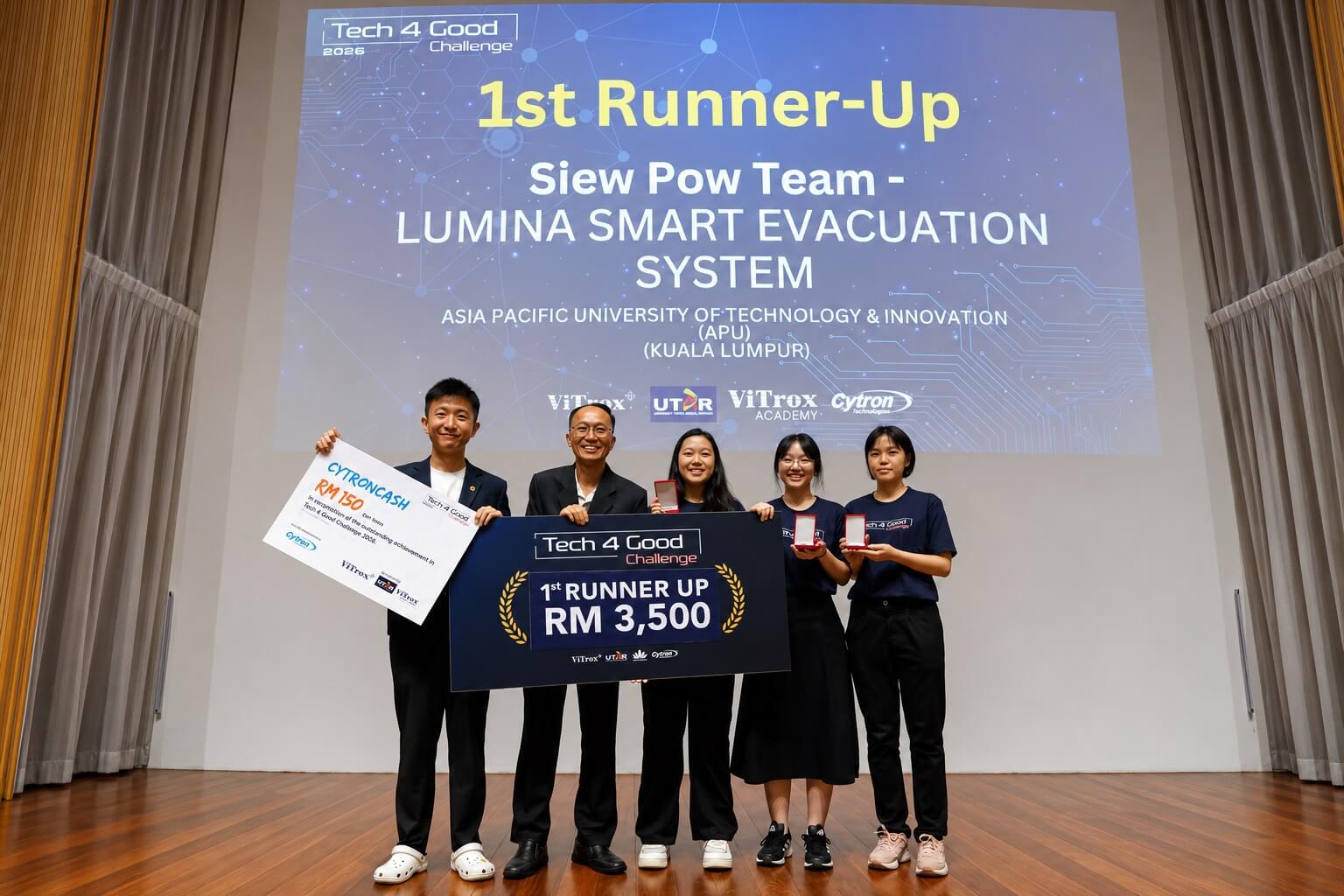
Three APU School of Computing and Technology students have transformed classroom knowledge into a potentially life-saving innovation, earning First Runner-Up at the Tech 4 Good Challenge 2026 with a smart evacuation system designed to guide people more safely during emergencies.
Ever wondered what would happen if an exit sign could do more than simply point towards a fixed doorway?
Three students from the School of Computing (SoC) and School of Technology (SoT) at Asia Pacific University of Technology & Innovation (APU) asked that very question — and turned it into an award-winning solution.
Team Siew Pow, comprising Team Leader Lai Zi Huey, a Bachelor of Science (Honours) in Information Technology with a specialism in Business Information Systems student; Low Wei Ling, a Bachelor of Science (Hons) in Software Engineering student; and Woo May Eng, a Bachelor of Science (Honours) in Information Technology with a specialism in Cloud Engineering student, emerged as First Runner-Up at the Tech 4 Good Challenge 2026 Grand Finale, held in Batu Kawan, Penang, on 25 July 2026.
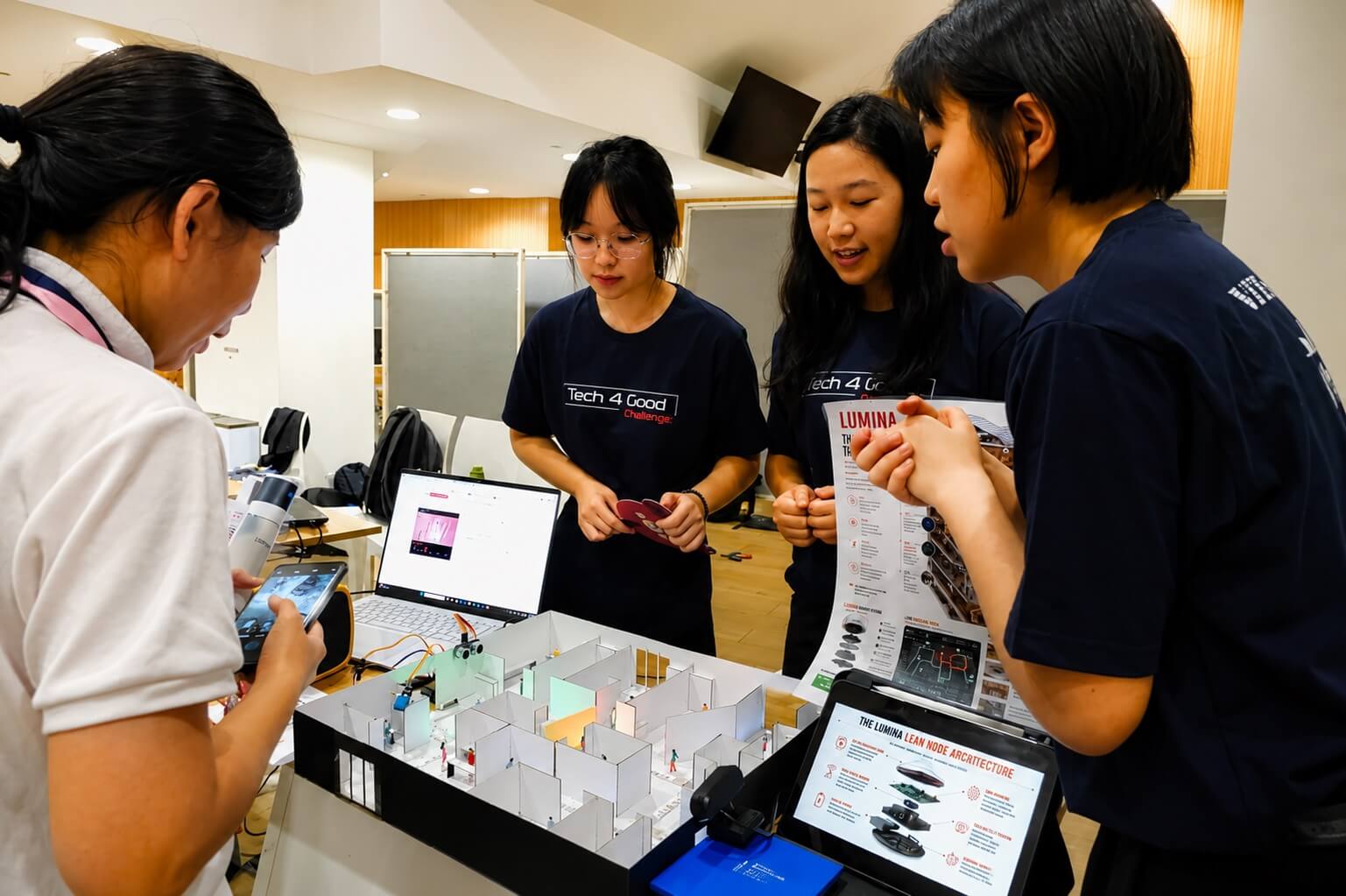
Their innovation, the Lumina Smart Evacuation System, reimagines how occupants can be guided to safety when conditions inside a building are changing rapidly.
Rethinking the Conventional Exit Sign
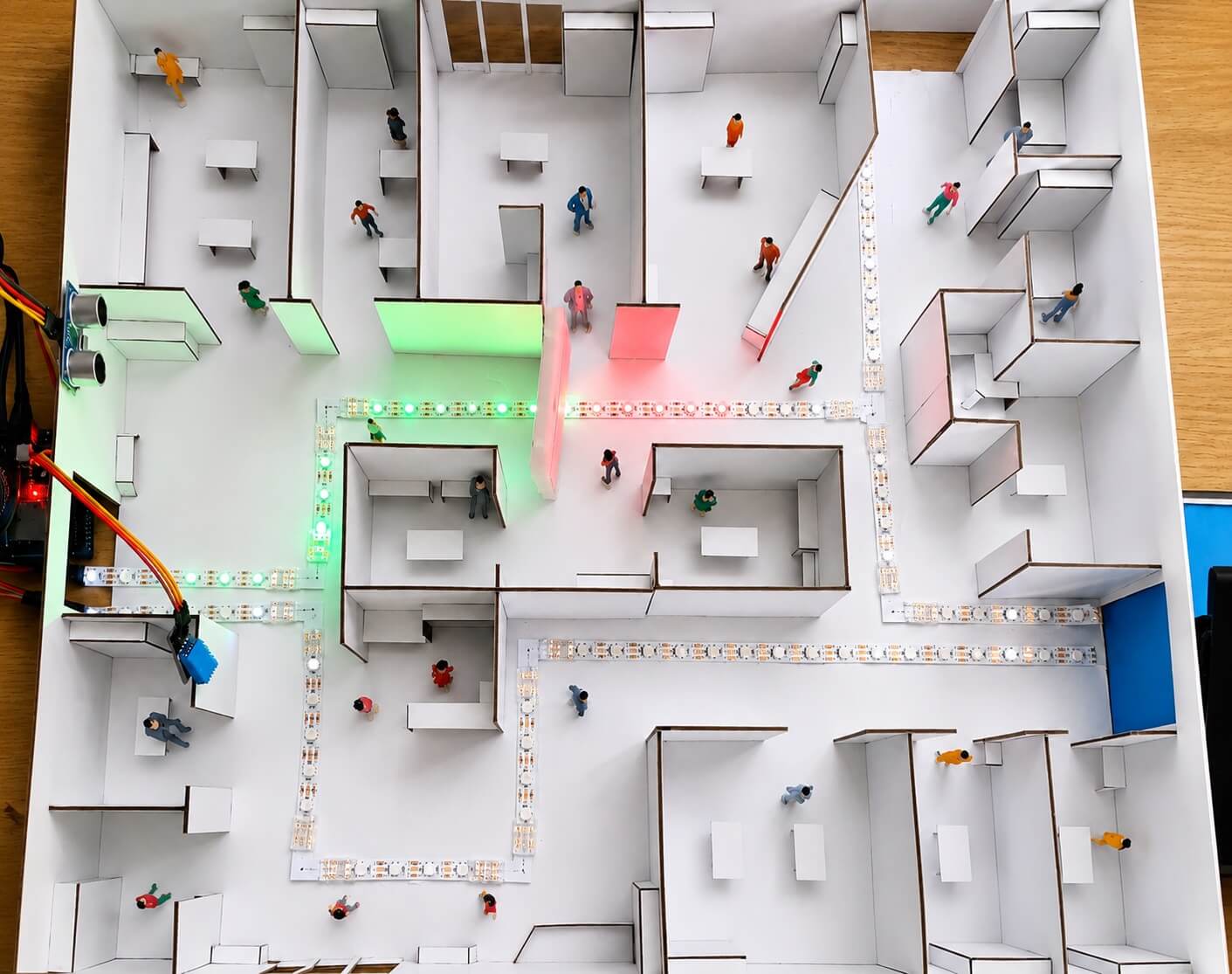
Traditional emergency exit signs are static. While they indicate predefined evacuation routes, they cannot respond when those routes become unsafe because of fire, smoke, overcrowding or other hazards.
Lumina was designed to address this limitation through a decentralised smart evacuation system capable of assessing conditions and adapting evacuation guidance in real time.
Using a combination of RGB cameras, thermal infrared and acoustic sensors, alongside edge artificial intelligence, deterministic dynamic routing and floor-projected adaptive guidance, the system can identify hazards and redirect occupants towards safer routes.
More importantly, the team designed the solution with people at its centre, incorporating multi-sensory guidance to better support elderly occupants and individuals with sensory impairments.
From Classroom Concepts to Working Prototype
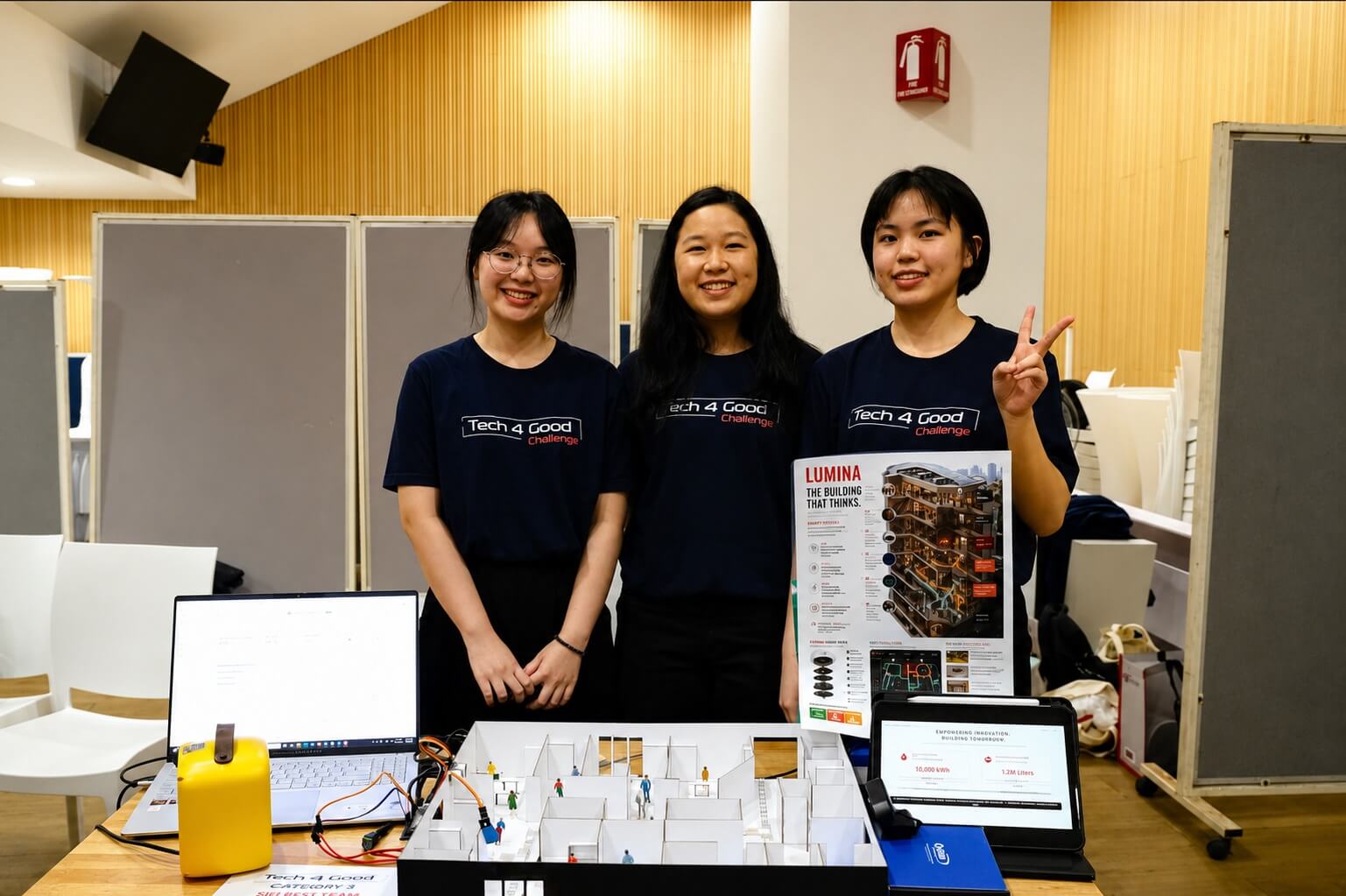
Jointly organised by ViTrox Technologies and a local university, the Tech 4 Good Challenge encourages young innovators to develop engineering solutions using technologies such as artificial intelligence and the Internet of Things (IoT) to tackle real-world problems.
Team Siew Pow progressed through preliminary screenings and prototype showcases to become one of only 24 finalists from nearly 190 participating teams.
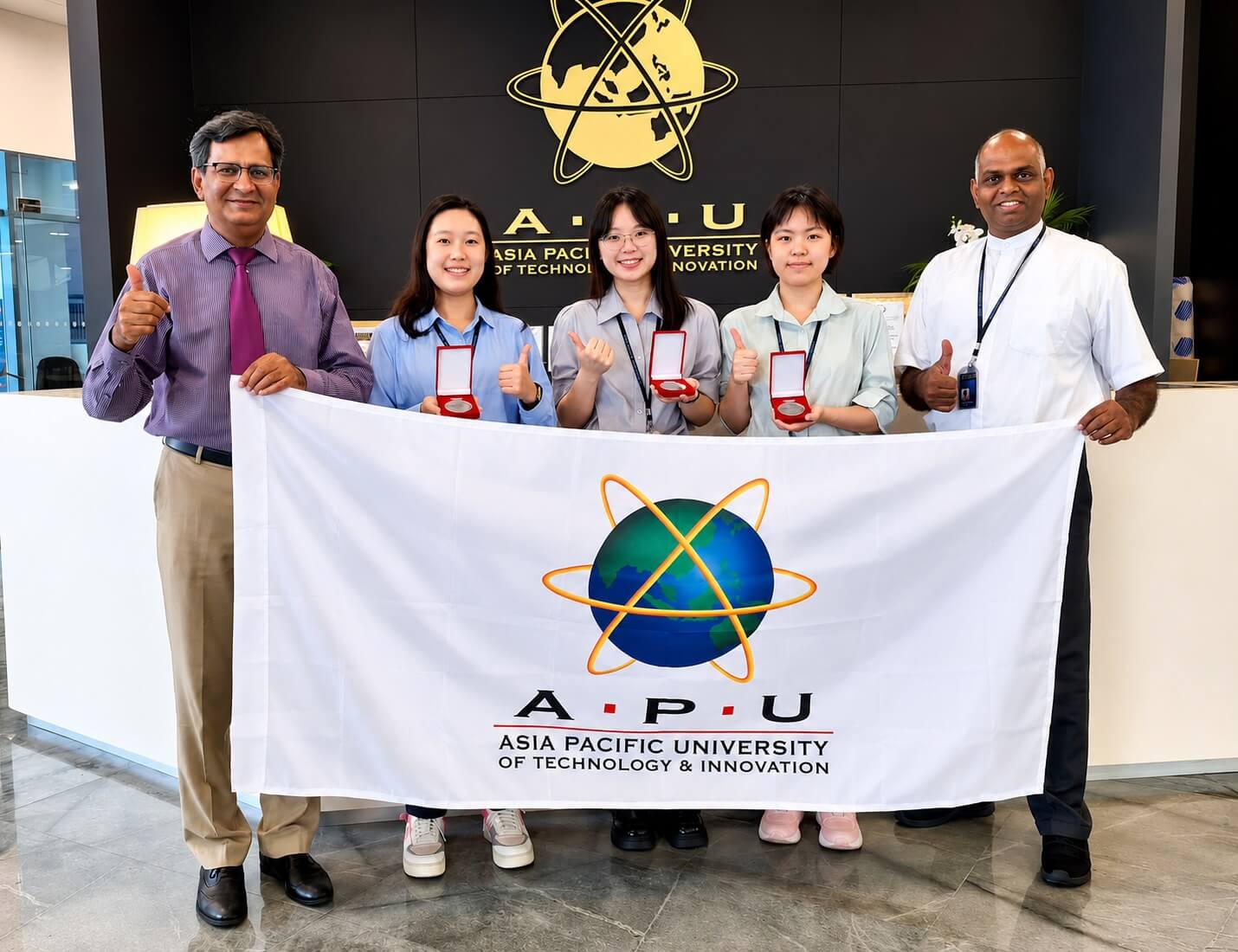
Guided by Dr Kamalanathan Shanmugam, Senior Lecturer at SoT, and Assoc Prof Dr Muhammad Ehsan Rana, Associate Professor at SoC, the students progressively refined their technical architecture, tested their prototype through staged simulations and strengthened the way they communicated complex engineering ideas to judges and industry audiences.
Reflecting on the journey, Lai Zi Huey, the Team Lead, said the experience allowed the team to see how knowledge gained in class could become something tangible and meaningful.
“Building Lumina enabled us to transform classroom knowledge in system architecture, interface design and programming into a functional prototype. We applied real-time data processing, YOLO-based computer vision and dynamic A* routing to monitor crowds and identify safer evacuation paths. Although IoT hardware was new to us, our software foundation helped us integrate controllers, sensors, visual guidance and audio alerts,” she said
“Dr Muhammad Ehsan Rana and Dr Kamalanathan Shanmugam were instrumental in guiding this transition. Their technical advice helped us refine the Detect–Decide–Guide concept, assess feasibility and integrate the software, dashboard, routing logic and hardware into one coherent, working system,” added Zi Huey.
Engineering with Measurable Impact
Testing conducted by the team demonstrated several promising outcomes. Lumina achieved a 58.6% reduction in 90th-percentile evacuation time, while its IoT-enabled “Pull Policy” stop-line mechanism was designed to manage crowd movement and reduce dangerous bottlenecks.
Its inclusive, multi-sensory interface addresses the needs of a wider range of occupants, while its proposed Hardware-as-a-Service (HaaS) commercial model explores how life-safety infrastructure could be maintained and deployed more sustainably instead of being treated solely as a one-off capital expense.
For the mentors, however, the students’ development throughout the competition was as significant as the final technological outcome.
“Beyond the technical achievement, they demonstrated resilience, teamwork and a genuine commitment to creating technology that protects lives, especially the most vulnerable,” said Dr Kamalanathan, whose expertise encompasses Cloud, Networking and IoT.
Assoc Prof Dr Muhammad Ehsan agreed, adding, “Their journey from proposal to First Runner-Up underscores the University’s commitment to experiential learning and the development of graduates who can apply knowledge to solve pressing real-world problems. We are extremely proud of their outstanding achievement.”
Preparing Students for Problems Beyond the Classroom
The achievement illustrates how professional knowledge becomes most meaningful when paired with practicality, empathy and an implementation mindset.
For Lai, Low and Woo, the Tech 4 Good Challenge was therefore more than a competition. Working under pressure, dividing responsibilities, refining a prototype and responding to technical scrutiny offered a glimpse of the environment they will encounter in their future careers — one where teamwork, speed, expertise and adaptability must operate together.
Their Lumina Smart Evacuation System ultimately demonstrates a simple but powerful idea: when innovation begins with a real human need, technology can move beyond the classroom and contribute towards making everyday environments safer for everyone.